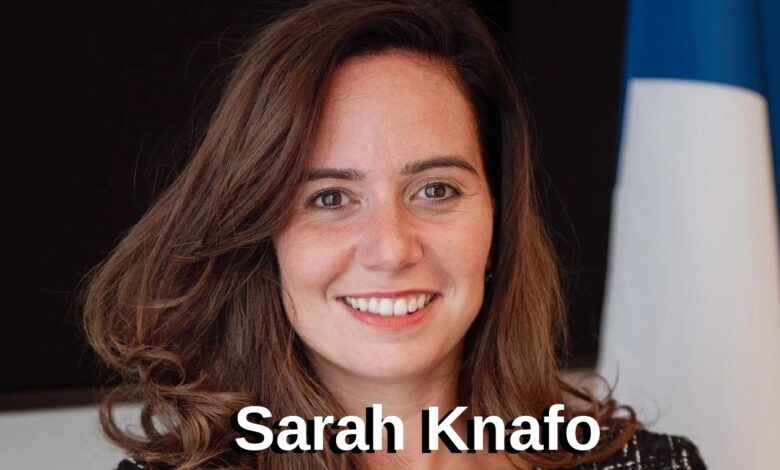
Sarah Knafo is a name that has steadily gained attention in French political and intellectual circles over the past few years. While she may not always dominate headlines in the same way as front-line politicians, her influence behind the scenes is undeniable. Known for her analytical depth, strategic thinking, and strong ideological positioning, Knafo represents a new generation of political minds who operate at the intersection of policy, identity, and national debate.
What makes Sarah Knafo particularly interesting is that she does not fit neatly into traditional political stereotypes. She combines a rigorous academic background with practical political engagement, allowing her to navigate complex policy environments while remaining grounded in real-world political dynamics. This balance has earned her respect among allies and critics alike, even when her views spark controversy.
In an era where political communication is often simplified for mass consumption, Knafo stands out for her willingness to engage with difficult ideas. She is not merely a commentator or advisor; she is a thinker who contributes meaningfully to ongoing discussions about sovereignty, governance, and the future of France. Understanding her role helps illuminate broader shifts taking place within French politics today.
Early Life and Intellectual Foundations
Sarah Knafo early life played a crucial role in shaping her intellectual identity. From a young age, she demonstrated a strong inclination toward analytical thinking, debate, and structured reasoning. Rather than gravitating toward surface-level political slogans, she showed interest in the deeper philosophical and institutional foundations of governance. This curiosity would later define her approach to politics and public discourse.
Her academic journey further reinforced these tendencies. Sarah Knafo pursued higher education with a focus on law, public administration, and political structures, fields that demand precision and discipline. Through rigorous study, she developed a solid understanding of how institutions function, how power is exercised, and how legal frameworks shape political outcomes. This background gave her tools that many political actors lack: the ability to move seamlessly between theory and practice.
Equally important was her exposure to diverse ideological perspectives during her formative years. Rather than adopting a single worldview uncritically, she engaged with competing schools of thought. This intellectual openness did not dilute her convictions; instead, it sharpened them. By understanding opposing arguments, she learned how to defend her positions more effectively and anticipate criticism, a skill that would become central to her later career.
Entry Into the Political Sphere

Sarah Knafo entry into politics was not sudden or accidental. It was the result of deliberate preparation and a clear sense of purpose. Rather than seeking immediate visibility, she chose roles that allowed her to understand the mechanics of political power from the inside. This strategic patience set her apart from those who prioritize short-term recognition over long-term influence.
Her early political involvement focused heavily on advisory and strategic functions. In these roles, she contributed to policy development, messaging frameworks, and organizational planning. While these positions often remain invisible to the general public, they are where many critical decisions are shaped. Sarah Knafo ability to synthesize complex information and translate it into actionable strategies made her a valuable asset in these environments.
Over time, her reputation grew as someone who combined ideological clarity with operational competence. She was not content to merely articulate ideas; she worked to ensure they could be implemented within existing political structures. This practical orientation helped her gain trust among political leaders who needed advisors capable of navigating both vision and reality.
Political Philosophy and Core Beliefs
At the heart of Sarah Knafo public identity lies a clearly defined political philosophy. She places strong emphasis on national sovereignty, institutional integrity, and the role of the state in preserving social cohesion. For Sarah Knafo, politics is not just about managing economic indicators or winning elections; it is about maintaining a coherent national project.
One of her defining beliefs is the importance of strong, accountable institutions. She often stresses that democracy cannot function effectively without clear rules, respected boundaries, and responsible leadership. This perspective leads her to critique what she sees as institutional erosion, whether caused by external pressures or internal complacency. Her arguments are typically grounded in legal and constitutional reasoning rather than emotional appeals.
Another key aspect of her philosophy is cultural and political realism. Sarah Knafo does not shy away from addressing sensitive topics, particularly those related to identity, governance, and globalization. While this approach can be polarizing, it reflects her conviction that avoiding difficult conversations ultimately weakens democratic societies. She believes that honesty, even when uncomfortable, is essential for meaningful political progress.
Role as a Strategist and Advisor
Sarah Knafo is perhaps best known for her work as a strategist. This role requires a unique combination of foresight, adaptability, and discipline, qualities she has consistently demonstrated. As a strategist, she focuses on long-term objectives rather than short-term gains, helping shape political movements that can sustain themselves over time.
Her advisory work often involves crafting coherent narratives that align ideology with voter concerns. She understands that political success depends not only on having strong ideas but also on communicating them effectively. By refining messaging and ensuring consistency, she helps bridge the gap between abstract principles and everyday realities faced by citizens.
In addition, Sarah Knafo is known for her analytical rigor. She evaluates political environments carefully, identifying risks, opportunities, and potential points of resistance. This methodical approach allows her to anticipate challenges before they become crises. As a result, her strategic input is valued not just for its ideological alignment but for its practical effectiveness.
Public Perception and Media Presence
Public perception of Sarah Knafo is complex and multifaceted. Supporters often describe her as intelligent, principled, and refreshingly direct. They appreciate her willingness to articulate clear positions without resorting to vague language or excessive compromise. For many, she represents a serious, thoughtful alternative to performative politics.
Critics, on the other hand, sometimes view her as overly rigid or ideologically assertive. Her refusal to soften her views for broader appeal can be seen as a strength or a weakness, depending on perspective. However, even critics often acknowledge her intellectual consistency and depth, qualities that are increasingly rare in contemporary political discourse.
Her media presence reflects this duality. Sarah Knafo does not seek constant exposure, but when she does appear in public discussions, she tends to leave a strong impression. Her communication style is measured and deliberate, favoring substance over spectacle. This approach reinforces her image as a serious political thinker rather than a media personality.
Influence on Contemporary French Politics
Sarah Knafo influence extends beyond individual campaigns or political figures. She is part of a broader movement that seeks to redefine how politics is discussed and practiced in France. By emphasizing structure, identity, and long-term planning, she contributes to a shift away from purely reactive policymaking.
Her ideas have resonated particularly in debates about national autonomy and democratic legitimacy. In these discussions, she challenges assumptions that have gone largely unquestioned for decades. Whether one agrees with her conclusions or not, her contributions force policymakers and commentators to engage more deeply with foundational issues.
Moreover, her influence can be seen in the growing prominence of strategic thinking within political organizations. By demonstrating the value of preparation, coherence, and intellectual clarity, Sarah Knafo has helped elevate the role of behind-the-scenes strategists in shaping public outcomes. This impact may be less visible than electoral victories, but it is no less significant.
Future Prospects and Long-Term Impact
Looking ahead, Sarah Knafo trajectory suggests continued relevance in French political life. Whether she remains primarily a strategist or takes on more visible roles, her intellectual imprint is likely to persist. Her ability to adapt to changing political landscapes while maintaining core principles positions her well for long-term influence.
Her future impact will depend in part on how French politics evolves. In times of uncertainty and institutional strain, figures like Sarah Knafo often gain prominence because they offer structure and clarity. Her emphasis on coherence and responsibility may resonate increasingly as voters seek alternatives to fragmented political narratives.
Ultimately, Sarah Knafo represents more than an individual career; she embodies a particular approach to politics. One that values preparation over improvisation, substance over spectacle, and conviction over convenience. Regardless of one’s political stance, her role in shaping modern French political thought is both noteworthy and enduring.