Puzutask Com: The Ultimate Modern Guide to Maximizing Operations and Digital Workflows

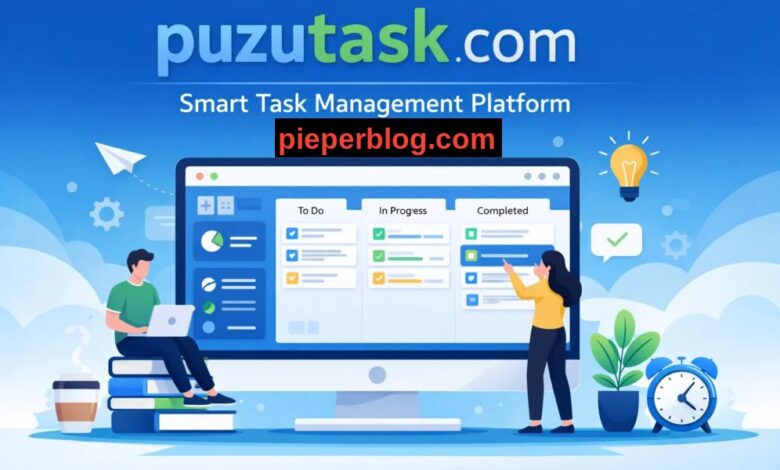
Puzutask Com In the fast-paced evolution of digital work environments, finding a centralized space that effectively bridges the gap between complex project architecture and human capability is rare. Puzutask Com has rapidly emerged as a notable name in this landscape, serving as a versatile hub that addresses multiple facets of digital productivity. From teams trying to streamline their internal communications to independent professionals looking to master operational efficiency, the platform acts as an engine for optimization. It addresses the common pitfall of modern work: using too many fragmented applications that cause tracking loops and communication breakdowns.
Understanding what Puzutask Com offers requires looking beyond basic feature lists to see how the system alters day-to-day work habits. When a business or independent operator integrates Puzutask Com into their daily regimen, they are shifting from a reactive “firefighting” mindset to a highly structured, automated flow. The digital workspace is crowded with tools that promise massive transformations but deliver confusing interfaces. This comprehensive guide breaks down how this platform avoids those traps, alters operational trajectories, and functions under real-world project strain.
Deconstructing the Core Mechanics of Puzutask Com
At its fundamental level, Puzutask Com is engineered around the philosophy that task execution should be intuitive, transparent, and completely free of manual bottlenecks. The backend infrastructure supports deep data processing while presenting the end-user with a clean, scannable layout that prioritizes immediate priorities. Instead of drowning users in nested sub-menus, Puzutask Com relies on flat structural logic, ensuring that critical data points are always exactly where a project manager or a field contractor expects them to be. This eliminates the invisible time-drain of clicking through endless directories just to find a single status update.
One of the standout design choices within Puzutask Com is the emphasis on contextual integrity. When a user creates a task or assigns a deliverable, the platform ties all relevant media, instruction sets, and historical comments directly to that specific node. This means that if an employee or external collaborator jumps into a project mid-way through its lifecycle, they do not need to request an oral history of what has occurred. They can simply open the Puzutask Com interface, read the chronological progression, and immediately understand the operational context.
Furthermore, the system minimizes the human error associated with manual status updates by utilizing reactive triggers. When a baseline milestone is met, Puzutask Com automatically shifts dependent elements downstream, modifying timelines and alerting the relevant departments without requiring a manager to act as a human router. It is this specific combination of micro-level task tracking and macro-level visibility that makes Puzutask Com highly effective for organizations dealing with complex, multi-layered operations.
Navigating the Automated Workflow Engine of Puzutask Com

Automation is often treated as a buzzword, but Puzutask Com implements it as a core architectural feature rather than a flashy add-on. The automated workflow engine inside Puzutask Com allows managers to build out intricate, conditional conditional logic paths—if an event occurs in department A, a corresponding action is instantly generated for department B. For example, the moment a legal document passes compliance verification within the platform, a notification and an automated invoicing prompt are instantly deployed to the finance branch.
[Task Initiated] ➔ [Automated Review Trigger] ➔ [Cross-Department Real-Time Sync]
This structural handoff completely replaces manual email threads, which are notoriously prone to getting lost or ignored. However, implementing this level of automation within Puzutask Com does require an initial phase of systematic planning. Teams must map out their existing real-world rules logically before programming them into the dashboard; otherwise, they risk creating infinite feedback loops where automated tasks trigger redundant actions. When configured accurately, the time savings are immediate, reducing weekly alignment meetings by up to 25% for mid-sized teams.
The visual component of this engine relies heavily on dynamic, drag-and-drop timelines that alter capacity data in real time. If a vendor or a technical team experiences a three-day delay, moving their block on the Puzutask Com calendar automatically pushes all subsequent dependent tasks back. This gives leadership an honest look at their overall company bandwidth, allowing them to adjust client expectations or reallocate internal assets long before a minor delay escalates into a major operational bottleneck.
Evaluating the Strategic Impact and Reality of Puzutask Com
Deploying a powerful tool like Puzutask Com is not an overnight magic trick; it represents a major shift in how a workforce communicates. The financial and operational trajectory of adopting Puzutask Com involves a short-term adjustment period that organizations must prepare for. During the initial implementation weeks, teams often experience a temporary dip in sheer output as users adjust to the new interface rules, break old habits of using scattered text messages or personal spreadsheets, and learn to centralize their logs.
Traditional Workflow: [Scatter Emails] -> [Manual Sheets] -> [Misaligned Teams]
Puzutask Com Flow: [Centralized Log] -> [Auto-Allocation] -> [Unified Real-Time Output]
The long-term return on investment, however, becomes evident once the framework is fully adopted, particularly for teams containing 20 to 75 active users. In this mid-tier range, the adoption rate accelerates because the pain of managing disjointed communications becomes intolerable without a platform like Puzutask Com. The base pricing tiers offer excellent baseline value, though growing organizations should note that deep customization, complex user permissions, and highly granular custom reporting will eventually necessitate moving up to enterprise-level configurations.
To avoid a software relapse—where a team slowly drifts back to unorganized communication habits—leadership must enforce the use of Puzutask Com as the absolute source of truth for the company. If a conversation about a project deliverable happens in an external app, it needs to be documented inside the corresponding Puzutask Com card. By holding this line, companies build a robust, searchable archive of institutional knowledge that protects them against sudden staff turnover and significantly accelerates the onboarding process for future hires.
Quick Facts and Overview of Puzutask Com
To help visualize how this platform stacks up, here is a quick breakdown of its structural realities, sweet spots, and operational parameters:
| Operational Metric | Puzutask Com Specification |
| Optimal Team Size | 20 to 75 active users for maximum efficiency |
| Core Architecture | Flat structural logic with reactive, conditional triggers |
| Primary Benefit | Reduces alignment meetings by roughly 25% through centralization |
| Implementation Curve | 2 to 3 weeks of adjustment before reaching peak efficiency |
| Data Integrity | Contextually tied cards with real-time drag-and-drop timeline scaling |
| Communication Focus | Eliminates scattered threads via centralized, in-app task histories |
Frequently Asked Questions (FAQ)
What makes Puzutask Com different from standard task managers?
Unlike basic to-do list applications that simply log items, Puzutask Com connects communication directly to task execution. It features a built-in conditional automation engine that links cross-department dependencies, meaning actions taken by one team automatically trigger and format the next step for another team, entirely removing the need for manual handoffs.
How long does it take for a team to get fully comfortable on Puzutask Com?
While the onboarding interface is clean, a realistic deployment timeline involves about two to three weeks for a team to fully adapt. During this transitional phase, output might slow slightly as employees phase out fragmented communication channels (like external chats and independent spreadsheets) and establish Puzutask Com as their single source of truth.
Can Puzutask Com handle remote and field teams effectively?
Yes, the cloud-based nature of Puzutask Com ensures that real-time synchronization happens across all connected devices. Field teams can update task logs, upload relevant media, or adjust project milestones directly from their location, which immediately updates the master timeline viewed by managers back at the central office.
Does Puzutask Com scale well as a business grows?
The platform is built to scale smoothly, showing its highest return on investment once a team reaches 20 to 75 users. While the standard tiers provide robust task tracking and automation, rapid scaling that requires intricate user permission levels or deep analytical reporting will eventually lead an organization toward enterprise-level options.