Basqueserpartists: History, Identity, and the Ongoing Quest for Self-Determination

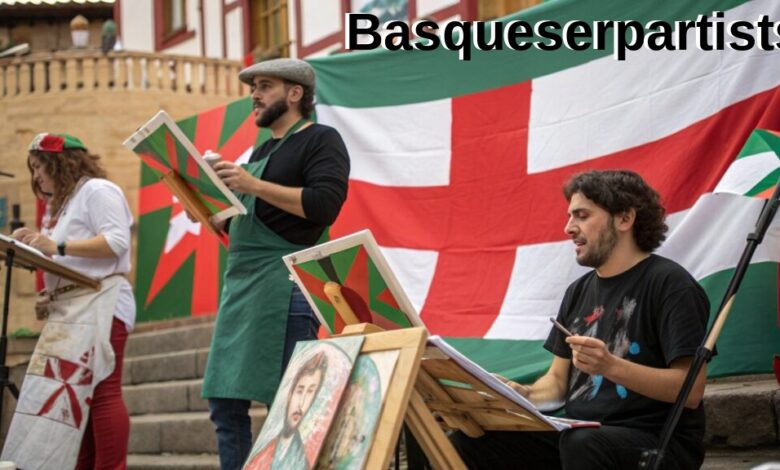
The term “Basqueserpartists” is commonly used online to refer to Basque separatists—groups and movements that seek greater autonomy or full independence for the Basque Country. While the spelling may vary in casual usage, the idea behind it points to one of Europe’s longest-running and most complex nationalist struggles. Rooted in a distinct language, culture, and historical experience, Basque separatism has evolved over centuries rather than decades.
This article takes a clear, expert-level yet casual look at Basqueserpartists: where the movement comes from, what it stands for, how it has operated politically and socially, and where it seems to be heading today. The aim is not to take sides, but to explain the movement with nuance, accuracy, and depth.
Historical Roots of Basqueserpartists
The origins of Basqueserpartists go back far earlier than modern nation-states. The Basque people are considered one of the oldest distinct ethnic groups in Europe, with a language—Euskara—that is unrelated to any other known language family. This deep historical uniqueness laid the foundation for a strong sense of identity long before Spain and France emerged as centralized states.
During the medieval period, Basque provinces enjoyed a significant degree of self-rule through local charters known as fueros. These legal frameworks allowed Basque communities to manage taxation, military service, and local governance independently. When Spain began centralizing power in the 18th and 19th centuries, the gradual loss of these rights created resentment that would later fuel separatist thinking.
The modern Basqueserpartists movement took clearer shape in the late 19th and early 20th centuries. Industrialization brought economic change but also cultural anxiety, as Spanish language and institutions expanded into traditionally Basque areas. Early nationalist thinkers argued that political independence—or at least autonomy—was necessary to preserve Basque identity in the face of modernization and state control.
Ideology, Identity, and Cultural Foundations

At the heart of Basqueserpartists ideology is cultural survival. Language, traditions, and collective memory are not side issues for the movement; they are central. Euskara has long been seen as the most powerful symbol of Basque uniqueness, and its preservation has been a unifying goal across ideological differences within the movement.
Basqueserpartists are not ideologically monolithic. Some strands of the movement emphasize ethnic identity and tradition, while others focus on civic nationalism, social justice, or left-wing political theory. This diversity has allowed the movement to adapt over time, appealing to different generations and social groups without losing its core narrative of self-determination.
Religion, class, and regional identity have also shaped the movement in complex ways. Earlier nationalist leaders often linked Basque identity with Catholic values, while later groups aligned separatism with labor rights and anti-capitalist ideas. Despite these differences, the shared belief that the Basque people constitute a distinct nation remains the ideological glue holding Basqueserpartists together.
Political Strategies, Movements, and Key Actors
The political expression of Basqueserpartists has ranged from peaceful activism to more controversial methods. In the mid-20th century, frustration with authoritarian rule—particularly under Spain’s Franco regime—pushed some groups toward underground resistance. This period marked the rise of militant separatist organizations that believed armed struggle was the only viable path to independence.
At the same time, legal political parties and civic organizations continued working within institutional frameworks. These groups focused on regional elections, cultural promotion, and negotiations for autonomy. Over time, they gained significant influence, especially after Spain’s transition to democracy, which allowed for regional self-government.
In recent decades, the balance has shifted decisively toward political and democratic methods. Militant activity has largely ended, and mainstream Basqueserpartists now operate through elections, public debate, and international advocacy. This shift has helped normalize the movement and integrate it into broader European discussions about regionalism and self-rule.
Contemporary Landscape, Challenges, and Future Outlook
Today, Basqueserpartists operate in a very different environment than their predecessors. The Basque Autonomous Community enjoys one of the highest levels of self-government in Europe, including control over taxation and public services. This reality has led some to question whether full independence is still necessary or even desirable.
However, the movement has not disappeared—it has transformed. Younger generations often frame Basqueserpartists goals in pragmatic terms, focusing on economic sustainability, cultural globalization, and democratic legitimacy. Independence is still discussed, but it is often presented as a long-term option rather than an urgent demand.
Looking ahead, the future of Basqueserpartists will likely depend on broader European trends. Issues such as regional inequality, cultural homogenization, and the role of the European Union all influence how the movement defines its goals. What remains consistent is the core belief that the Basque people should have the right to decide their political future, whatever form that decision ultimately takes.
Final Thoughts
Basqueserpartists are best understood not as a single group, but as a broad historical movement shaped by culture, politics, and changing global realities. From medieval self-rule to modern democratic activism, the movement reflects a persistent desire to protect identity while navigating the pressures of larger states.
Whether one views Basque separatism as necessary, outdated, or evolving, it remains a fascinating case study in how identity and politics intersect over centuries. The story of Basqueserpartists is ultimately about endurance—of language, memory, and the belief that communities should have a meaningful say in how they are governed.