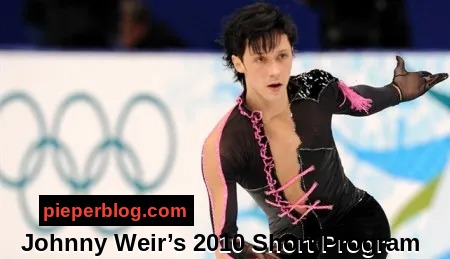
Johnny Weir’s 2010 Short Program When you think about the most memorable moments in Olympic figure skating history, you might default to flawless quad jumps or dramatic, tearful podium finishes. But if you talk to any true enthusiast of the sport, the conversation inevitably veers toward a moment that did not even win a medal, yet completely stole the show. We are talking about johnny weir’s 2010 short program at the Winter Olympic Games in Vancouver. It was an iconic, boundary-pushing performance that perfectly encapsulated who Johnny Weir was as an artist and an athlete.
For fans of artistic figure skating, johnny weir’s 2010 short program remains a masterclass in musical interpretation, emotional vulnerability, and pure charisma. Skated to “I Love You, I Hate You” by Raul di Blasio, the routine was a breath of fresh air in a competitive field that was increasingly starting to feel like a math test. Let’s dive deep into what made this particular performance so special, why the judges’ reaction caused a massive uproar, and why we are still talking about it more than a decade later.
The Audacity of “I Love You, I Hate You”
[ Opening Pose: Soft, Intricate Arm Movement ]
│
▼
[ Technical Element: Triple Axel Jump Pass ]
│
▼
[ Artistic Peak: Passionate Step Sequence ]
To understand the impact of johnny weir’s 2010 short program, you have to understand the music and the look. Weir chose a dramatic piece by Argentine pianist Raul di Blasio, a track that perfectly mirrored the duality of his relationship with the sport of figure skating. It was theatrical, full of sudden shifts in tempo, and required a skater who could emote with their entire body, not just their facial expressions. Weir did not just skate to the music; he inhabited it, matching every crescendo with an edge change or a dramatic extension.
The costume for johnny weir’s 2010 short program was an absolute masterpiece of design and a direct reflection of his personality. It featured an intricate, sparkling black-and-pink design, adorned with delicate lace trim, mesh cutouts, and a sprinkling of crystals that caught the arena lights beautifully. In a sea of male skaters wearing safe, traditional, or pseudo-masculine black vests, Weir stood out like a brilliant, shimmering diamond. He proved that high fashion and elite athleticism could live together harmoniously on the ice.
What made the choreography of johnny weir’s 2010 short program stand out from his competitors was its seamless continuity. Under the strict Code of Points system, many skaters would noticeably stop performing to prepare or gather speed for their next major jump pass (Piiroinen). Weir, however, disguised his setups with intricate transitions, unexpected footwork, and expressive arm movements. The entire routine felt like a singular, unbroken thought rather than a checklist of required elements.
Execution Under Pressure on the Vancouver Ice

When Johnny Weir stepped onto the ice in Vancouver, the pressure was immense. He had long been a polarizing figure in the American skating federation, often criticized by traditionalists for being “too flamboyant” or focusing too much on the art rather than the raw power. But when the music started for johnny weir’s 2010 short program, all the outside noise evaporated. He delivered a technically flawless performance that was as clean as it was captivating.
Every mandatory element in johnny weir’s 2010 short program was executed with astonishing precision. He nailed his opening triple Axel, landed a beautiful triple lutz-triple toe loop combination, and executed a flawless triple loop out of intricate footwork. His spins were exceptionally tight, centering perfectly on the ice, and his flexibility was unmatched in the men’s field. The live audience in Vancouver could feel that they were witnessing something truly historic, and the energy inside the building grew with every passing second.
By the time Weir spun into his final closing pose, the crowd erupted into a roaring standing ovation, showering the ice with stuffed animals and flowers. It was a triumphant moment of personal vindication for an athlete who had fought tooth and nail to stay true to his unique vision. He smiled, waved, and looked genuinely happy, knowing he had just delivered the absolute skate of his life on the biggest stage in the world.
The Controversy of the Scoring System
Then came the scores, and the mood in the Pacific Coliseum quickly shifted from pure joy to utter confusion. Despite skating a totally clean routine with no visible errors, the judges placed Weir in sixth place after the short program segment. The scoring breakdown sparked an immediate and furious debate among commentators, fans, and fellow skaters regarding how artistry was being valued under the International Judging System.
+————————————————————+
| VANCOUVER 2010 SHORT PROGRAM SCORING |
+————————————————————+
| Skater Performance Status: Flawless, Clean Execution |
| Audience Reaction: Standing Ovation / Massive Applause |
| Judges’ Verdict: 82.10 Points (6th Place Placement) |
+————————————————————+
| CRITICS’ VERDICT: Under-scored on Program Components |
+————————————————————+
The core of the controversy surrounding johnny weir’s 2010 short program lay in the Program Component Scores (PCS), which are meant to evaluate skating skills, transitions, performance, composition, and interpretation. Many experts argued that Weir was heavily low-balled in these subjective categories compared to skaters who put on far more mechanical, dry routines. The judging system at the time heavily rewarded technical difficulty—specifically the quadruple jump—even if the overall program lacked cohesion or beauty (Hao).
This scoring discrepancy highlighted a growing philosophical divide within the figure skating community. Weir himself famously noted that the sport was becoming “more math” and “less art,” as skaters were forced to cram in point-maximizing elements at the expense of choreography (Hao). The aftermath of johnny weir’s 2010 short program became a textbook example of how the judging system could sometimes fail to reward true, authentic artistry, cementing Weir’s status as a tragic, heroic figure of the modern skating era.
Quick Facts Table
| Attribute | Details of the Performance |
| Skater | Johnny Weir (Team USA) |
| Event | 2010 Winter Olympic Games (Vancouver, Canada) |
| Segment | Men’s Singles Short Program |
| Music Track | “I Love You, I Hate You” by Raul di Blasio |
| Costume Design | Black and pink with intricate lace, mesh, and crystals |
| Technical Content | Triple Axel, Triple Lutz-Triple Toe Combination, Triple Loop |
| Segment Score | 82.10 points |
| Final Placement (Short) | 6th Place |
Frequently Asked Questions
What music did Johnny Weir use for his 2010 short program?
Johnny Weir used the passionate, dramatic piano track “I Love You, I Hate You” by Argentine pianist Raul di Blasio. The music choice allowed him to display his world-class musical interpretation and dramatic flair.
Why was Johnny Weir’s 2010 short program considered controversial?
The controversy stemmed from his surprisingly low scores. Despite skating a completely clean routine with zero falls or major technical errors, the judges placed him in sixth place, leading to widespread accusations that his Program Component Scores were unfairly suppressed.
Who designed the famous costume for this routine?
The costume was designed by Johnny Weir himself, in collaboration with designer Stephanie Handler. Weir was famous for designing his own avant-garde competitive attire to ensure it perfectly matched the emotional vision of his music.
Where did Johnny Weir finish overall at the 2010 Vancouver Olympics?
After placing sixth in the short program, Weir skated another clean, beautiful performance in his free skate to finish in sixth place overall. While he did not take home an Olympic medal, his performances were widely considered the emotional highlights of the men’s event.