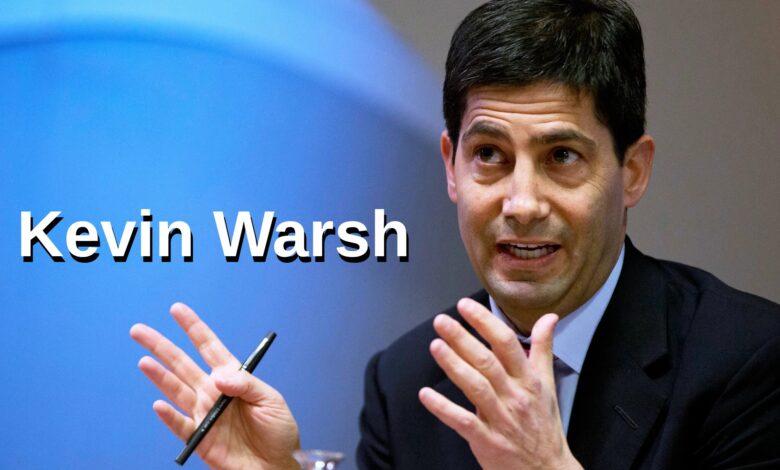
Introduction: Why Kevin Warsh Still Matters
Kevin Warsh is one of those figures who never really leaves the conversation, even when he’s technically out of public office. His name keeps popping up whenever discussions turn serious—about the Federal Reserve, financial stability, inflation, or the future direction of U.S. monetary policy. That staying power doesn’t happen by accident. It comes from being present at critical moments and having opinions that continue to shape debate long after the headlines fade.
What makes Warsh especially interesting is the mix of insider experience and outsider candor. He has seen the machinery of financial governance from the inside, during one of the most stressful periods in modern economic history. At the same time, he’s been willing to step back and critique that same machinery when he believes it’s drifting off course.
In this article, we’ll unpack Kevin Warsh’s background, his role at the Federal Reserve, and the ideas that keep him relevant today. The goal isn’t hype or criticism for its own sake, but a clear, expert-level look at why his voice continues to carry weight in economic and policy circles.
Early Career and the Road to Influence
Kevin Warsh’s rise didn’t follow a flashy or celebrity-style path. Instead, it was built on a steady accumulation of experience across finance, law, and public policy. Early in his career, he worked in investment banking, where he gained firsthand exposure to capital markets, corporate finance, and the real-world consequences of financial decision-making. That private-sector grounding later became a defining feature of his policy views.
He also spent time in government before joining the Federal Reserve, serving in advisory roles that connected economic theory with political reality. This mix of Wall Street discipline and Washington process gave Warsh a reputation as someone who could translate complex financial issues into language policymakers could act on. That skill is rare—and highly valued—in times of crisis.
By the time he was nominated to the Federal Reserve Board, Warsh was already seen as a bridge figure. He understood markets well enough to earn credibility with investors, while also appreciating the institutional responsibilities of central banking. That dual fluency set the stage for his most consequential years in public service.
Kevin Warsh at the Federal Reserve

Kevin Warsh joined the Federal Reserve Board of Governors in 2006, just before the global financial system began to crack. When the financial crisis hit in 2008, he was suddenly at the center of decisions that would define a generation of economic policy. Interest rates, emergency lending facilities, bank rescues—these weren’t abstract concepts. They were urgent choices with enormous consequences.
During this period, Kevin Warsh was known as a strong advocate for stability and clear communication. He worked closely with other policymakers to calm markets and restore confidence, often acting as a key liaison between the Fed and Wall Street institutions. His understanding of market psychology helped the Fed anticipate reactions and adjust its messaging accordingly.
At the same time, Kevin Warsh began to develop concerns about the long-term implications of unconventional monetary policy. While he supported aggressive action during the crisis, he was wary of how extended low interest rates and balance sheet expansion might distort markets. Those concerns would later become central to his post-Fed commentary and public stance.
Views on Monetary Policy and Economic Risk
After leaving the Federal Reserve in 2011, Kevin Warsh became more outspoken about the direction of monetary policy. He has consistently argued that central banks must be careful not to overextend their role, especially when monetary tools are used to address problems better suited for fiscal or structural solutions. In his view, easy money can buy time—but it can also create complacency.
Kevin Warsh has frequently emphasized the risks of prolonged low interest rates. He believes they can encourage excessive risk-taking, inflate asset prices, and widen inequality by disproportionately benefiting those who own financial assets. This perspective doesn’t reject stimulus outright, but it insists on recognizing trade-offs rather than pretending there are free lunches in economic policy.
What stands out is how Kevin Warsh frames these arguments. He doesn’t rely on ideological slogans; instead, he leans on historical precedent, market behavior, and institutional credibility. His critiques often focus on the unintended consequences of policy, urging decision-makers to think several steps ahead rather than reacting only to immediate pressures.
Public Commentary and Ongoing Influence
Even outside formal office, Kevin Warsh remains deeply embedded in economic debate. He regularly speaks at conferences, contributes to policy discussions, and advises institutions grappling with macroeconomic uncertainty. His name often surfaces when new Federal Reserve appointments are discussed, a sign of the respect he commands across political and financial lines.
Kevin Warsh influence also comes from his ability to challenge consensus without sounding reckless. He acknowledges the complexity of modern economies and avoids simplistic solutions. That balance—confident but measured—makes his commentary appealing to both seasoned professionals and serious observers trying to make sense of shifting economic signals.
Importantly, Warsh doesn’t position himself as a lone contrarian. Instead, he frames his arguments as part of an ongoing institutional conversation about credibility, discipline, and long-term growth. In a world of hot takes and short-term thinking, that approach feels increasingly rare—and increasingly valuable.
Conclusion: The Legacy and Relevance of Kevin Warsh
Kevin Warsh’s career offers a case study in how expertise, timing, and thoughtful dissent can shape lasting influence. From his early days in finance to his pivotal role during the financial crisis, he has consistently operated where markets and policy intersect. That vantage point gives his views a depth that’s hard to replicate.
What ultimately defines Warsh is not just what he’s done, but how he continues to think about economic power and responsibility. He remains focused on institutional integrity, long-term stability, and the limits of any single policy tool. Those themes resonate strongly in an era marked by inflation concerns, market volatility, and political pressure on central banks.
Whether or not Kevin Warsh returns to a formal policy role in the future, his ideas are already embedded in the conversation. For anyone trying to understand the past decade of monetary policy—or anticipate what comes next—he remains a figure worth paying close attention to.